



Choosing the right basement sump pump can feel overwhelming with dozens of models, features, and technical specs to sort through.
Pick the wrong one, and you risk water damage, frequent repairs, or a system that fails when you need it most.
That is why we created this straightforward guide. We’ll walk you through seven practical steps1 to help you select a basement sump pump that matches your specific needs, budget, and basement conditions.
By the end, you’ll know exactly which type, capacity, and features make sense for your home.
Step 1 Understand What a Sump Pump Is and Why You Need One
Before selecting a basement sump pump, you need to grasp what this device does and whether your home requires one.
What is a Sump Pump?
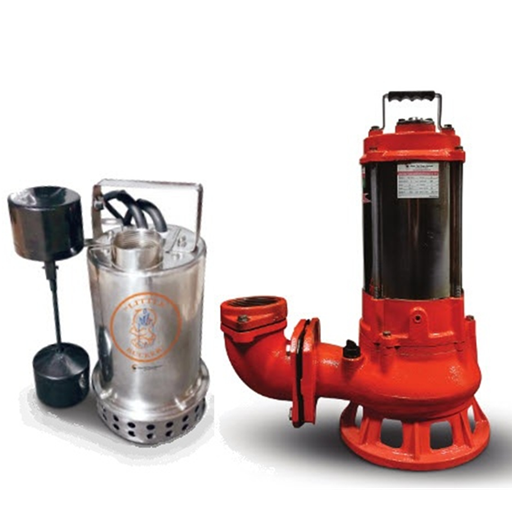
A basement sump pump is a device installed in the lowest part of your basement or crawlspace that diverts water from inside your home to an exterior location. The pump sits in a sump pit, which is a hole approximately 2 feet deep and 18 inches wide, dug into your basement floor with a gravel base. This pit acts as a collection point for water that enters through perimeter drains, groundwater seepage, or when your basement sits below the water table level.
The primary job of the pump is to prevent flooding by removing accumulated water before it damages your foundation, walls, or belongings. A typical sump pump can handle 20-100 gallons per minute [1]. Without this protection system, water will continue to accumulate and eventually flood your basement, creating structural damage and health hazards from mold growth.
How Does a Sump Pump Work?
Water enters the sump pit through drainage systems or natural groundwater flow. As the pit fills, a detection mechanism triggers the pump to activate. This detection happens through either a float switch, which rises with the water level like the mechanism in a toilet tank, or a pressure sensor that responds to water exerting more pressure than air.
Once activated, the pump uses centrifugal force to move water. An impeller (a screw or fan-like device) spins rapidly, forcing water toward the sides of the pipe and creating a low-pressure area at its center. Water from the pit rushes to fill this void, and the spinning action pushes it out through a discharge pipe. This pipe includes a one-way check valve that prevents water from flowing back into the pit after the pump stops.
The discharge pipe directs water away from your foundation to a storm drain, dry well, or drainage area far from your home. Once the water level drops, the float switch or sensor signals the pump to shut off automatically. During heavy rainfall or periods of saturated ground, the pump cycles on every few minutes as the basin continuously refills.
Signs Your Basement Needs a Sump Pump
Several indicators suggest your basement would benefit from a sump pump installation:
- Previous flooding events: If your basement has flooded even once, you face recurring risk without proper water removal
- Musty odors or dampness: Persistent moisture indicates water intrusion that can lead to mold, respiratory infections, and asthma complications
- Low-lying property location: Homes at the bottom of hills or in flat areas with water-trapping soil face higher flooding probability
- Water stains or efflorescence: White chalky residue or discoloration on walls and floors signals water penetration through your foundation
- Foundation cracks: Cracks in basement walls or floors allow water entry, especially when located near ground level
- Finished basement or valuable storage: If you’ve invested in finishing your space or store important items, protection against water damage becomes necessary
- Heavy precipitation area: Regions with significant annual rainfall or snowmelt require active water management systems
- Clay or silt soil: These soil types trap water longer than sandy soil, increasing saturation around your foundation
- Neighbor flooding reports: If surrounding homes experience water problems or have installed pumps, your property likely faces similar risks
Your home’s water table position also matters. Basements built below the water table or in flood-prone zones need pumps to manage constant groundwater pressure against the foundation. Without intervention, concrete’s porous nature allows water to seep through when surrounding soil becomes waterlogged.
Step 2 Choose Between Submersible and Pedestal Sump Pumps
Once you’ve determined your basement needs protection from water intrusion, selecting between submersible and pedestal models becomes your first major decision. Each type operates differently and suits specific basement conditions.
Submersible Sump Pumps
Submersible pumps rest at the bottom of the sump pit, fully submerged in water during operation. The motor sits inside a sealed, waterproof casing designed to function underwater without damage. Water surrounds the entire unit, which helps cool the motor and prevents overheating during extended use.
This design creates several advantages. The underwater placement muffles operational noise significantly, making submersible pumps considerably quieter than alternatives [1][1]. The sound absorption from water and the underground location means you’ll barely notice when the pump cycles on. For finished basements where you spend considerable time, this quiet operation proves valuable.
Submersible pumps deliver higher pumping capacity and can handle larger water volumes quickly [1][1]. They efficiently move water and small debris, reducing clogging risks from particles that enter through drainage systems [1]. The compact, submerged design eliminates visible equipment in your basement, saving usable space [1][1].
However, the underwater location creates maintenance challenges. Accessing internal components for repairs requires removing the pump from the pit, which demands more effort than servicing above-ground equipment [1][1]. Submersible models typically cost more upfront than pedestal versions [1]. The sealed motor design and submersion also make these pumps more susceptible to debris buildup and potential clogging despite their debris-handling capabilities [1].
Pedestal Sump Pumps
Pedestal pumps position the motor on a shaft or column above the sump pit, keeping it elevated and dry. Only the impeller and intake pipe extend down into the water. This separation between motor and water prevents moisture damage to electrical components.
The elevated motor placement delivers distinct benefits. You can access all components without entering the pit or removing equipment, making maintenance and repairs straightforward [1][2]. Pedestal pumps last significantly longer, typically 2 to 5 times the lifespan of submersible models [1]. This extended durability stems from reduced water exposure and less wear on motor parts. Pedestal models also cost less initially, with prices ranging from $100 to $300 for basic units [1].
The tradeoffs include reduced pumping power. Pedestal pumps remove water more slowly than submersible units, which increases flooding risk during severe storms [1][2]. The exposed motor generates more noise during operation, which you’ll hear clearly if the basement sits below living areas [2]. The visible equipment occupies floor space and creates potential tripping hazards, particularly for children and pets [1][2].
Which Type is Right for Your Basement?
Your decision hinges on several basement-specific factors. Choose submersible pumps if you experience frequent heavy flooding, use your basement regularly as finished living space, or need rapid water removal to protect valuable items [1]. The quiet operation and powerful capacity justify the higher cost in flood-prone areas.
Select pedestal pumps when you face occasional light flooding, prefer easy do-it-yourself maintenance access, work within a tight budget, or have limited pit depth [2][3]. The longer lifespan and lower initial investment make pedestal models sensible for homes where flooding occurs infrequently and noise doesn’t pose concerns.
Step 3 Determine the Right Pump Capacity and Power
Sizing your basement sump pump correctly prevents two costly problems: underpowered pumps that fail during heavy water events, and oversized units that short-cycle and wear out prematurely [2].
Calculate Your Basement’s Water Volume
Measuring actual water inflow provides the foundation for pump selection. During a heavy rain, run your existing pump until it fully drains the basin and shuts off. Unplug the pump, measure the standing water depth, then wait exactly one minute and measure again [4]. Subtract the first measurement from the second to determine how much water accumulated in that timeframe.
For an 18-inch diameter basin, each inch of water equals approximately one gallon. In a 24-inch diameter basin, one inch equals roughly two gallons [5]. Besides measuring during storms, you can estimate based on soil type. Sandy soil requires planning for 14 gallons per minute for every 1,000 square feet of home, while clay soil needs 8 gallons per minute per 1,000 square feet [4][5].
Understand Horsepower Ratings
Horsepower determines how much power your pump produces to empty the sump pit through discharge piping [6]. For most average-sized homes in areas with average water tables, a 1/3 HP basement sump pump handles the workload sufficiently [7][6]. These pumps manage 7 to 10 feet vertical lifts with one 90-degree elbow and horizontal pipe runs between 3 and 25 feet [6].
Homes with above-average water tables need 1/2 HP pumps, which deliver 35% to 40% more capacity than 1/3 HP models [7][6]. Higher vertical lifts of 10 to 15 feet or longer horizontal runs of 30 to 150 feet may reduce water flow due to increased friction, requiring higher pumping capacity [6].
Properties in high water table areas, flood plains, or homes with deeper basements require 3/4 HP or 1 HP pumps [7][6][8]. A pump that’s too small won’t handle heavy water flow, while an oversized unit repeatedly turns on and off, wearing out the motor prematurely [2].
Gallons Per Hour (GPH) Requirements
Most residential pumps handle 35 to 60 gallons per minute [8]. Homes in moderate rainfall areas typically need pumps rated at 2,500 to 3,500 gallons per hour [9]. Basements with multiple water sources might require units rated at 4,000+ GPH, while small spaces with minimal water inflow function adequately with 2,000 GPH units [9].
Account for Vertical Lift Height
Vertical lift measures the height water must travel from the sump basin to the discharge point outside your home [2][10]. Manufacturers list GPH capacities at different vertical lift heights, thus you can verify the pump’s power suits your home [2]. Higher lifts demand more power to effectively discharge water [2]. Friction from longer horizontal distances also requires additional power to overcome water flow loss [6][10].
Step 4 Select the Best Switch Type and Construction Materials
Switch mechanisms and housing materials affect your basement sump pump’s reliability as much as capacity and power specifications.
Tethered Float Switches
A tethered float switch consists of a hollow plastic enclosure with a switch mechanism inside, connected to the pump or discharge piping by a cord [11]. As water fills the basin, the float swings in an arc, tilting upward until it activates the internal switch mechanism [11]. The tether point and cord length determine when the pump starts [11].
These switches work well in larger sump pits with diameters of 14 inches or greater [12]. The float requires room to swing freely without catching on basin walls or the pump itself [1]. Gold-plated electrical connections resist accelerated pitting and wear [13]. Tethered switches have been tested to over 1 million cycles [12], making them durable for specific applications.
Vertical Float Switches
Vertical float switches slide up and down on a rod rather than swinging freely [1]. This design works better in smaller basins where tethered floats might get stuck [1]. The float rises with water level and pushes against a lever to activate the switch [14].
Solid core floats prove most reliable since they cannot waterlog or crack [15]. However, mechanical floats can be compromised if punctured, take in water, or if debris seizes the mechanism [1]. Vertical switches typically offer approximately a 4-inch on/off span with adjustable activation heights [16].
Electronic Switches
Electronic switches represent the most reliable option available [1]. Instead of mechanical floats, an internal sensor detects water level changes [1]. These switches feature piggyback plugs that connect to wall outlets, with the pump plugging into the switch [1].
Without moving mechanical parts, electronic switches often outlive the pump itself [1]. Sensors measure electrical resistance when probes contact water, comparing readings against preset values [14]. This design takes up minimal space and delivers exceptional reliability when paired with proper power sources [1].
Cast Iron vs. Plastic vs. Stainless Steel Housing
Cast iron housing offers superior durability and heat dissipation, pulling heat away from the motor to extend its lifespan [8]. These pumps can last 15 to 20 years with minimal maintenance [17]. Cast iron resists corrosion in clean water applications [17] and proves heaviest, preventing pump movement inside the sump [18].
Plastic pumps cost less initially but last only a few years [17]. They cannot withstand dirty water conditions and break down faster [17]. Plastic impellers damage or strip more easily than cast iron counterparts [19].
Stainless steel provides corrosion-resistant, rust-proof performance [8]. Like cast iron, stainless steel effectively dissipates heat [8]. Bronze housing suits brackish water applications better than other materials [8].
Step 5 Consider Backup Systems and Additional Features
Beyond the primary pump, additional protection systems prevent basement flooding when your main unit fails or loses power.
Battery Backup Sump Pumps
Battery-powered backup systems activate when your primary pump stops functioning or power fails. These units use 12-volt deep-cycle batteries with capacities between 75Ah to 120Ah, allowing several hours of intermittent pumping that can extend over multiple days during blackouts [2]. A fully charged battery provides 7 to 8 hours of active pumping [2]. Most models move 800 to 2,000 gallons per hour [2], though batteries require replacement every five to seven years [2].
Water-Powered Backup Options
Water-powered pumps use municipal water pressure to create suction that removes water from your sump pit [2]. These systems remove 1 gallon of sump water for every 2 gallons of municipal water used [20]. They deliver unlimited run time as long as water pressure remains available [2], making them reliable during extended outages. However, they require municipal water service and won’t operate with well systems [2].
Combination Systems
Combo units combine a primary electric pump with a battery-powered backup in one streamlined system [2]. Both pumps share the same discharge line, simplifying installation [2]. These systems automatically switch between main and backup operation when power fails or water levels exceed the primary pump’s capacity.
Sump Pump Alarms and Smart Features
WiFi-enabled systems send real-time alerts via email, text, and phone calls when alarm conditions occur, such as high water levels or power failures [21]. Smart monitoring tracks pump cycles, battery status, and mechanical failures through mobile apps [2]. These features provide remote oversight without requiring basement visits.
Check Valves and Discharge Pipes
Install check valves on the discharge pipe just above the pump but below basement floor level to prevent water backflow into the sump pit [22]. Position the valve 8-12 inches above the pump’s discharge port on vertical pipe [22]. The arrow on the valve body must point away from the pump, indicating proper water flow direction [22]. Spring-loaded or quiet check valves reduce clunking noises when the valve shuts [22]. Use discharge pipes sized according to manufacturer specifications, typically 1.25 to 1.5 inches inside diameter [23]. Undersized pipes reduce pumping capacity and create back-pressure that forces the pump to run more frequently [23].
Conclusion
You now have a complete roadmap for selecting a basement sump pump that protects your home effectively. By understanding the basics, choosing the right pump type, calculating proper capacity, selecting durable materials, and adding backup protection, you can make an informed decision with confidence.
Without doubt, the right sump pump prevents costly water damage and gives you peace of mind during heavy storms. Take time to assess your specific basement conditions, water volume, and budget constraints.
Equally important, remember that proper installation and regular maintenance keep your system running reliably for years. Your basement deserves protection that works when you need it most.
References
[1] – https://www.fergusonhome.com/how-to-pick-the-perfect-sump-pump-switch/a29953?srsltid=AfmBOooLYUA_xVflkLE3QgEXInxKaERgpvVRB38LaH3thF9RwWD6ITBc
[2] – https://www.consumerreports.org/home-garden/sump-pumps/buying-guide/
[3] – https://www.lsc-texas.com/plumbing/sump-ejector-pumps/what-is-the-difference-between-a-pedestal-and-a-submersible-sump-pump/
[4] – https://envishoes.com/sump-pump-sizing-guide-calculating-the-right-horsepower-for-your-homes-water-removal-needs/
[5] – https://www.waterproofmag.com/2013/04/sizing-up-a-sump-pump/
[6] – https://www.fergusonhome.com/how-to-pick-the-perfect-submersible-sump-pump/a29865?srsltid=AfmBOorfRDGAPgqWka_Y_-cFoYx-iGmC0H-vzfd49NEXJ3ouWDLS3wgs
[7] – https://www.fergusonhome.com/how-to-pick-the-perfect-submersible-sump-pump/a29865?srsltid=AfmBOopn9bCY-mUOOH5DFzXnzDCNhcG-ebryA8ZrPf1MyZfVN3YnkE2u
[8] – https://zoellerpumps.com/2025/01/02/choosing-right-sump-pump-for-your-project/
[9] – https://levelupkc.com/does-it-matter-what-the-size-of-my-sump-pump-is/
[10] – https://zoellerathome.com/2023/09/15/properly-sizing-your-sump-pump/
[11] – https://support.boshart.com/setting-the-tether-point-and-tether-length-on-a-sump-pump-float-switch
[12] – https://k2pumps.com/products/sump-pumps/sump-pump-accessories/tethered-float-switch/
[13] – https://www.amazon.com/PumpSpy-Sump-Tethered-Float-Switch/dp/B093TMRTZZ
[14] – https://www.stephenspandh.com/4-types-of-sump-pump-float-switches
[15] – https://starwatersystems.com/2022/09/15/sump-pump-buyers-guide/
[16] – https://www.homedepot.com/p/Everbilt-Vertical-Float-Switch-for-Sump-Pumps-EBPBV/205618047
[17] – https://capstonewaterproofing.com/4-factors-to-consider-when-choosing-a-sump-pump-cast-iron-vs-plastic/
[18] – https://www.finehomebuilding.com/project-guides/plumbing/whats-the-difference-sump-pumps
[19] – https://www.basementsystems.ca/sump-pump/plastic.html
[20] – https://www.libertypumps.com/en-us/wp/dom/Products/Back-Up-Sump-Pumps/Water-Powered-Back-Ups/sj10-sumpjet
[21] – https://www.sumpalarm.com/products/sump-alarm-wifi-retrofit-kit-turn-any-panel-into-a-smart-alarm?srsltid=AfmBOooJ4b3cW5Zo3joYVQdRUs2UYLXnJJ78iFlvTRFSi619RTv8atf9
[22] – https://www.waterlinecontrols.com/where-to-put-check-valve-on-a-sump-pump/
[23] – https://www.uswaterproofing.com/learning-center/sump-pump-failure-your-discharge-pipe-may-be-too-small